
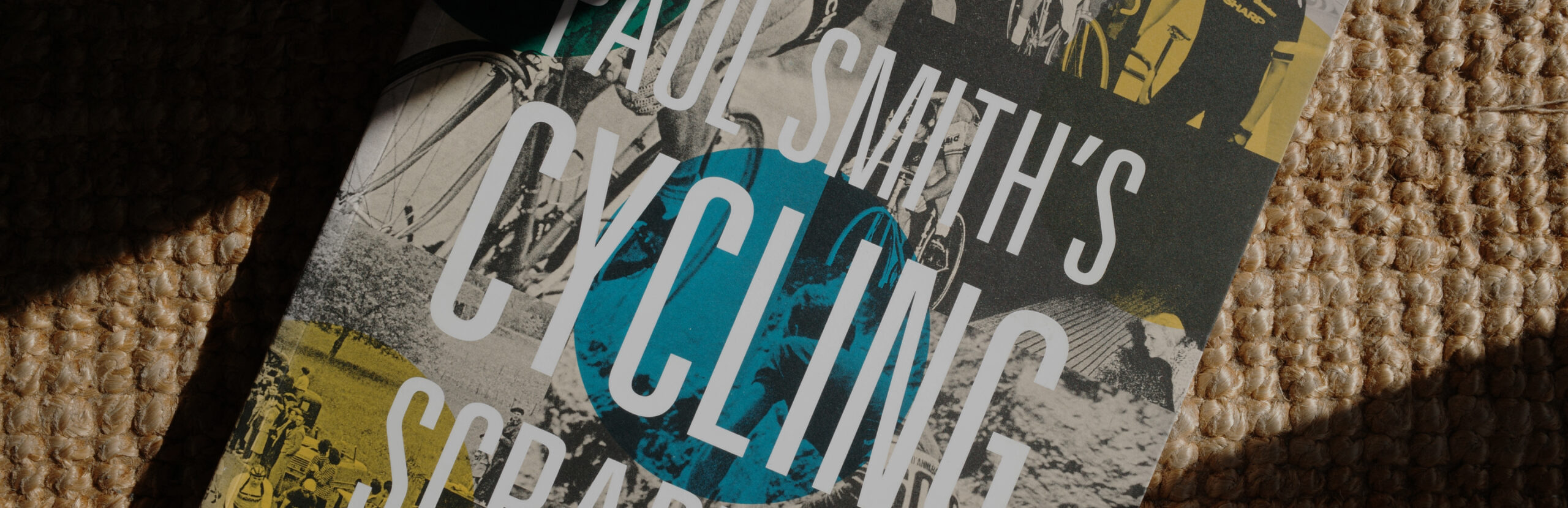

There are cycling books that recount heroic feats. Others compile statistics, race results, and iconic images from the Tour de France. Paul Smith’s Cycling Scrapbook belongs to none of these categories.
This is not simply a book about cycling. It is a book about memory, aesthetics, and creative obsession.
At first glance, it may appear to be another coffee-table publication dedicated to cycling culture. In reality, it is an intimate immersion into the universe of a globally renowned designer whose relationship with the bicycle runs far deeper than most might imagine.
With Paul Smith’s Cycling Scrapbook, the British creator does not celebrate performance. He celebrates perception. And that is precisely what makes this book unique.
Some links are affiliate links. Monoro may earn a commission at no extra cost to you.
Who Is Paul Smith, and What Is His Connection to Cycling?
Before becoming one of Britain’s most influential fashion figures, Sir Paul Smith dreamed of becoming a professional cyclist. As a teenager, he spent countless hours riding, immersed in British cycling culture of the 1950s and 1960s. A serious crash ended his sporting ambitions. But cycling never left him.
This biographical detail is far from incidental. It illuminates his entire body of work.
Cycling is a sport of aesthetics as much as endurance: the clean lines of a steel frame, the typography of a jersey, the chromatic palette of a team, the graphic rigor of horizontal stripes. In Paul Smith’s work, we find the same fascination with color, repetition, and structure. His famous multicolored stripes seem almost to echo the vintage jerseys of the peloton.
Paul Smith’s Cycling Scrapbook is not a marketing gesture. It is a return to the roots of a designer shaped by cycling culture.

Paul Smith’s Cycling Scrapbook: An Archive of Passion
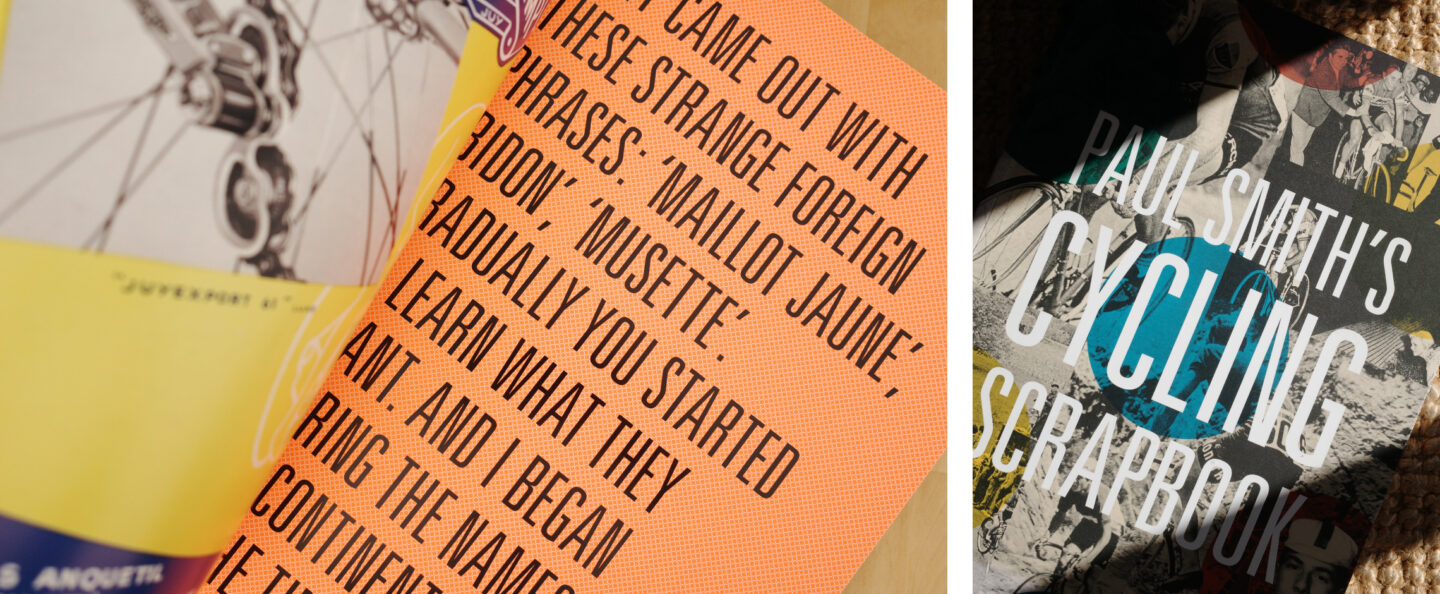
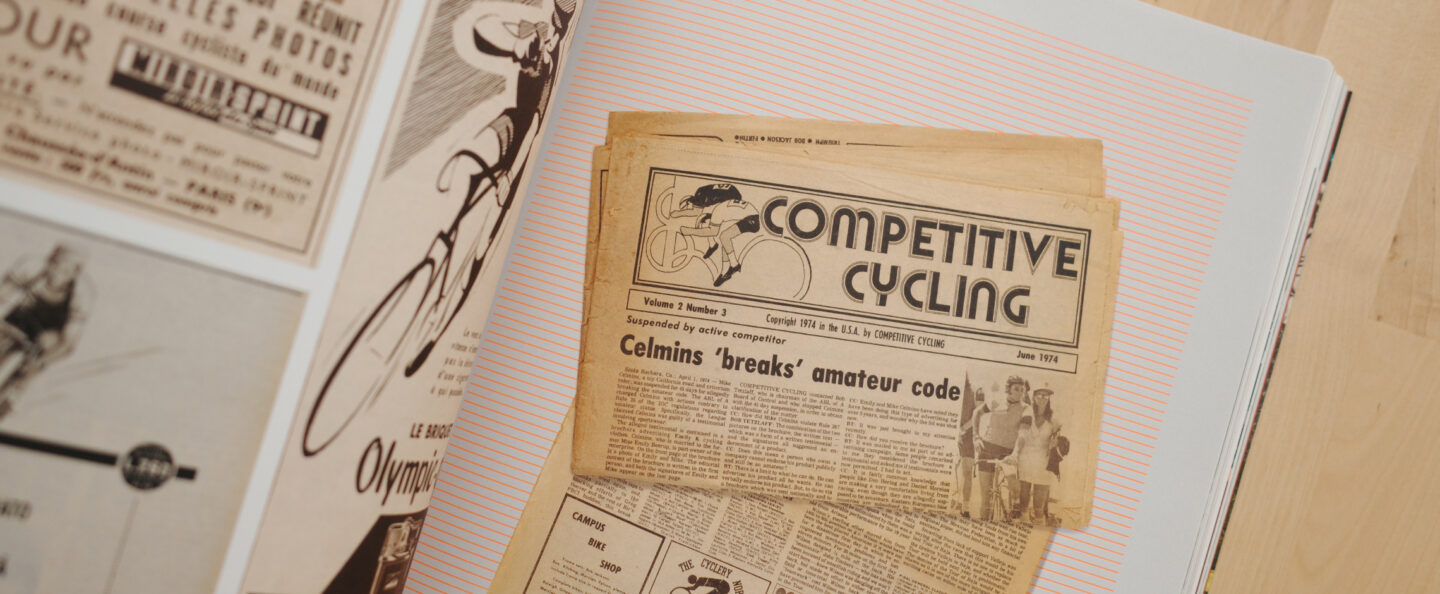
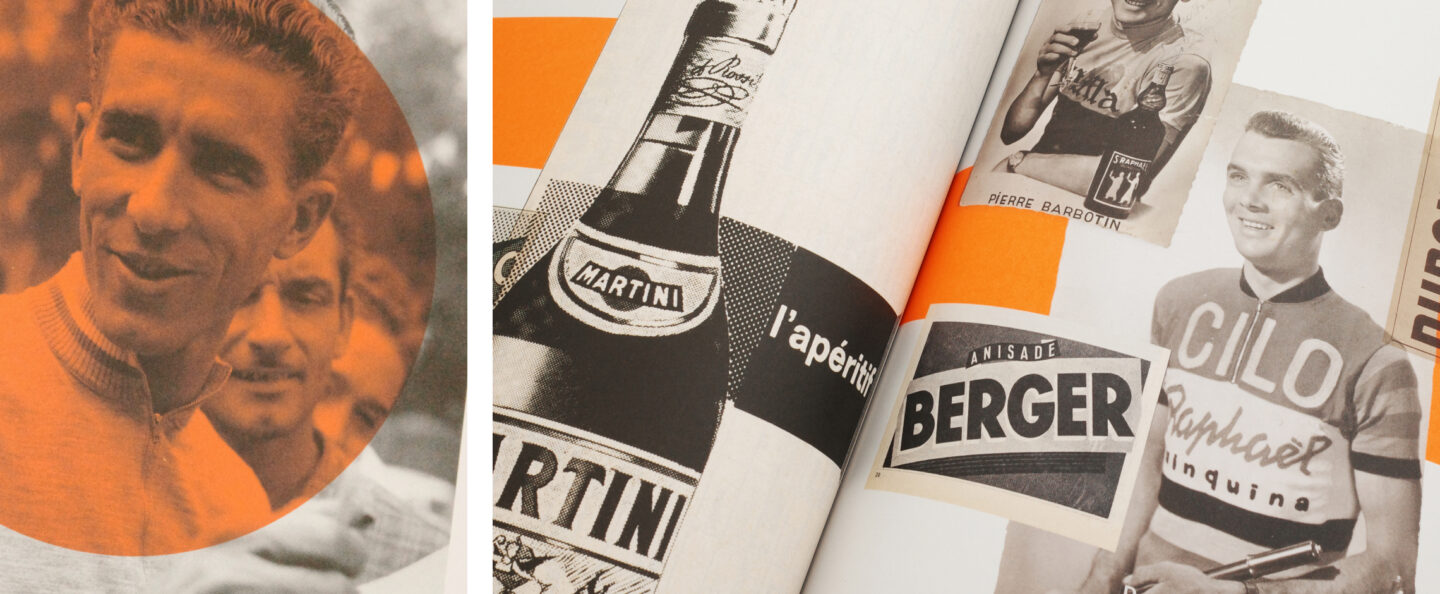
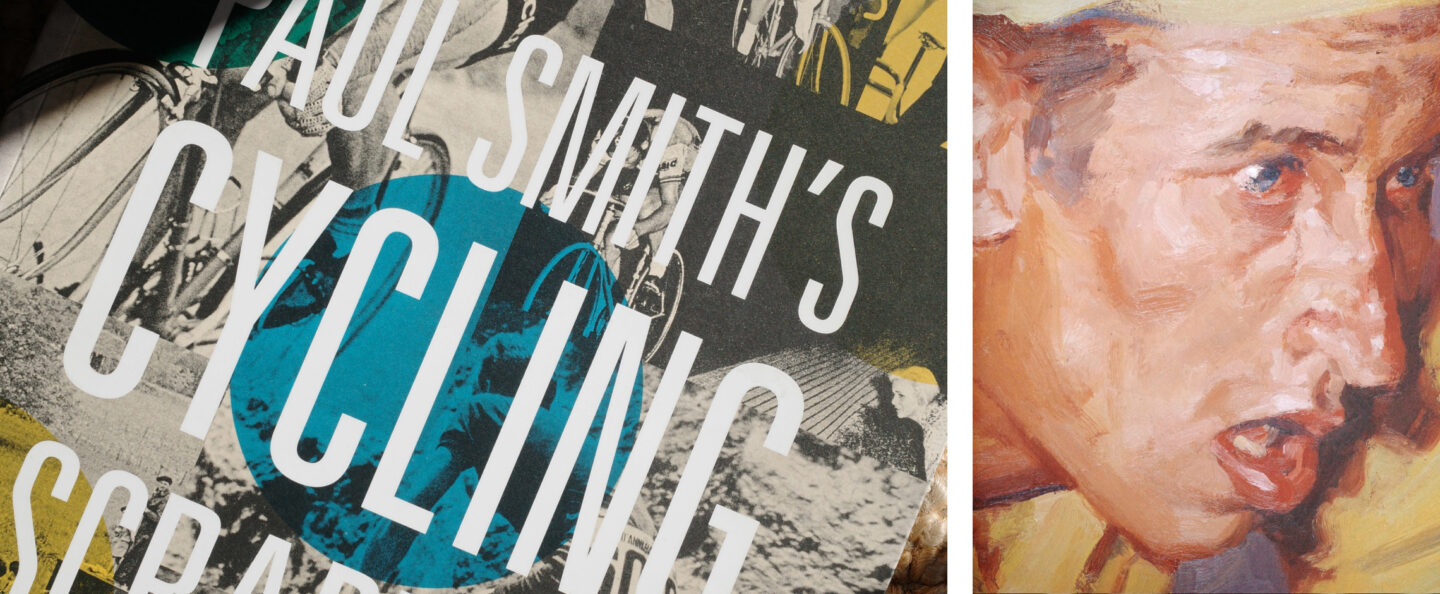
From the very first pages, the tone is clear. The book adopts a deliberately fragmented format, closer to a personal notebook than an academic study. Collages, vintage photographs, press clippings, historical posters, jersey graphics, handwritten anecdotes — turning the pages feels like exploring a private journal.
What stands out immediately is its authenticity. This is not an artificial reconstruction of cycling heritage. Each image, each reproduced object, feels drawn from a carefully curated personal collection.
The physical format reinforces this impression. The book is dense, visually rich, almost tactile. The paper quality, the layout, the layering of graphic elements create an experience that resembles stepping into a studio. One does not simply “read” Paul Smith’s Cycling Scrapbook — one explores it.
Unlike many cycling books structured around chronology or sporting narrative, this one adopts a sensitive, detail-oriented approach. A badge, an old advertisement, the typography of a forgotten sponsor — these fragments form the visual memory of cycling.
A Love Letter to Cycling’s Aesthetic
Le grand mérite de Paul Smith’s Cycling Scrapbook est de rappeler que le cyclisme est une culture visuelle autant qu’une discipline compétitive. Avant l’ère The great merit of Paul Smith’s Cycling Scrapbook is that it reminds us cycling is a visual culture as much as a competitive discipline.
Before the era of carbon frames and electronic drivetrains, the bicycle was a crafted object. Frames were signed by builders, jerseys instantly recognizable, teams defined by strong graphic identities. There was a visual coherence that the book subtly brings to light.
Paul Smith lingers on a period when cycling possessed a natural elegance:
- Finely welded steel frames
- Hand-painted logos
- Wool jerseys
- Independent neighborhood bike shops
This nostalgic perspective never feels reactionary. Instead, it prompts reflection on our current relationship with sport and style. In an era where marketing often dominates professional cycling’s image, Paul Smith’s Cycling Scrapbook reminds us that there is another way to love the bicycle — through its symbols, codes, and visual stories.
Bridging Fashion and Cycling Culture
Fashion and cycling may seem to belong to different worlds. This book demonstrates the opposite.
Fashion is concerned with lines, color, and symbolism. So is cycling. The jersey is both technical garment and identity statement. Teams construct their image through design. Brands shape collective imagination.
Paul Smith intuitively understands this proximity. His approach is not that of a stylist observing sport from the outside, but of a former enthusiast who grew up within its culture. His designer’s eye reveals what many cyclists sense but rarely articulate: the structural beauty of the bicycle.
In this sense, Paul Smith’s Cycling Scrapbook transcends the category of a “beautiful cycling book.” It contributes to a broader reflection on cycling culture as a way of life. The bicycle is not merely a vehicle for performance or transport, it is a symbol of freedom, discipline, and elegance.
Why This Book Matters for Cycling Culture
In a publishing landscape dominated by champion biographies and epic race narratives, this book offers a different perspective. It values the backstage elements, the objects, the graphics, the overlooked details that compose cycling’s collective imagination.
That perspective is important. Cycling culture does not live only on podiums. It lives in workshops, in old posters, in memories passed between generations. It lives in the attentive gaze of those who know how to observe.
For a media platform interested in cycling culture beyond competition, Paul Smith’s Cycling Scrapbook stands as a meaningful reference. It raises a broader question: how do we preserve and transmit this visual memory in the digital age?
Who Is This Book For?
This is not a book solely for fans of Paul Smith. It will resonate with nostalgic cyclists who love the history of the peloton, graphic design enthusiasts, collectors of cycling art books, and anyone who sees cycling as culture rather than merely sport. If you are looking for an aesthetic immersion into the world of the bicycle, this book deserves a place on your shelf. If you are looking for a technical manual, this is not it.
Should You Buy Paul Smith’s Cycling Scrapbook?
If you are sensitive to cycling’s aesthetic and visual history, the answer is yes. This is not a book to consume in one evening. It is a book to revisit. One you leaf through, set aside, and return to weeks later. It accompanies rather than instructs.
Paul Smith’s Cycling Scrapbook reminds us that cycling is a universe rich with symbols, colors, and personal narratives. It demonstrates that the boundary between design and the bicycle is thinner than it appears.
And perhaps that is the book’s true message: the bicycle is a cultural object. Those who take the time to observe it already know.
Some links in this article are affiliate links. If you click through from them, Monoro may earn a commission, at no extra cost to you. This helps us produce independent and high-quality content.